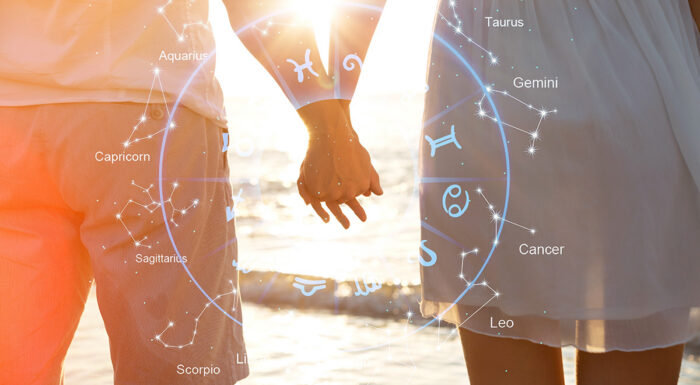
You’re dating someone new. Somehow you find out what their birthday is, and you Google your sun signs’ compatibility, the news of which either instantly buoys or dampens your spirits.
We’ve all been there. Most of us ultimately choose other criteria—both profound and petty—to decide whom we want to pursue a romantic relationship with. In a Pew Research Center study released last year, it was found that 28% of U.S. adults admit that they consult astrology annually, with 7% checking out horoscopes or astrological predictions once or twice a month, and 1% regularly relying on the stars to guide them toward better, often major, life decisions.
We dig into the psychology and science behind seeking guidance on life and love from the alignment of the stars.
Why Are People Leaning Into Astrology for Romantic Guidance?
It’s likely that people read horoscopes and background information on sun signs in the same way that my mom flips a coin when she wants to make a decision. The coin-flip “decision” is rarely final. Instead, her reaction to that decision tells her everything she needs to know about what she truly wants. Feeling reassured or resentful following a compatibility reading can often reveal surprising sides of our heart.
According to Katherine Wehler, a professional astrologer and new paradigm business coach, the vast majority of her clients are in their mid-30s and older, looking for love, and using astrology as a way to understand themselves and their own behavior more.
“I find they are less interested in establishing if their sun signs are compatible, and more interested in analyzing things like their past dating patterns and why they are attracted to certain partners,” she said. “They want to learn how to attract an ideal partner with the traits, and use astrology as a tool to have better, more fulfilling connections.”
Dr. Alexandra Foglia, director of family programs at All In Solutions, a network of treatment centers located in Florida, New Jersey and California, acknowledged that “astrology is much more mainstream” than it once was, and notes that many of her clients who are pursuing love talk about “astrology as an important part of their decision-making process.”
Foglia gently steers clients away from using astrology as the primary mechanism of judging compatibility and instead encourages them to explore the potential compatibility of their love interests’ behavior patterns.
“Decades worth of research regarding relationships indicate that behavior, not a birth chart, is significantly more indicative of successful long-term relationships,” she said. “When we look at how a person resolves conflicts, repairs after a disagreement occurs, demonstrates trust and shows support for each other’s goals, these are far stronger indicators of compatibility than a zodiac sign.”
Do Compatible Sun Signs Truly Predict Relationship Success?
Multiple scientific investigations that have examined the likelihood of marriage, and then divorce, based on sun sign compatibility has shown statistically insignificant differences across allegedly compatible and incompatible pairings.
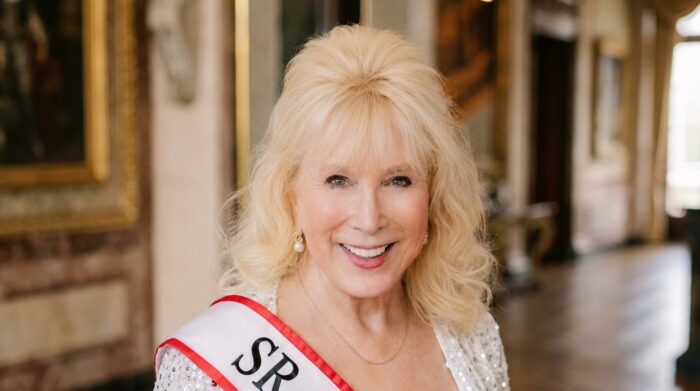
While communication and human behavior expert Dr. Lillian Glass agrees that astrology can be “fun,” it should not be used as the predominant factor when making a serious—potentially lifetime—decision.
“Rejecting someone simply because they are the ’wrong’ sign may cause you to miss an emotionally healthy, loving and compatible partner,” Glass said. “If astrology adds enjoyment to your dating life, that’s perfectly fine. But let it be one piece of the puzzle—not the entire puzzle. Your relationship should be guided more by the character of the person sitting across from you than by the stars above you. My advice is simple: Date the person, not the zodiac sign.”
Searching for Insight Beyond the Zodiac Sign
But professional astrologers, many of whom are trained researchers, contend that the scientific studies of sun sign compatibility are just skimming the surface and fail to measure the complex scope of astrological compatibility. And, when done correctly, relies on complete natal charts, including the location of the moon, Venus, Mars, planetary aspects, house overlays and more.

Michael Spremulli, a professional astrologer at Blue Ridge Astrology, explained that focusing on sun signs alone is the root of the problem. “Popular zodiac dating advice found online is largely unsupported by data. My perspective is that if astrology has anything useful to say about relationships, it is found in the interaction of the entire birth chart and underlying behavioral patterns, not simplistic sun-sign pairings.
“The question isn’t whether two signs are ‘good’ together. It’s whether two individuals understand and can effectively work with the differences in how they’re wired.”
He added that when astrologers mathematically combine two birth charts into a single chart, which represents the relationship itself, it can be informative.
Jaime Bronstein, a licensed dating and relationship therapist, admitted that she is personally “very into” astrology but that ultimately she wishes more people looked within for guidance. “I always say to my clients, ‘trust your intuition,’” she said. “It’s your inner compass and greatest guide. If you see a red flag, trust that.
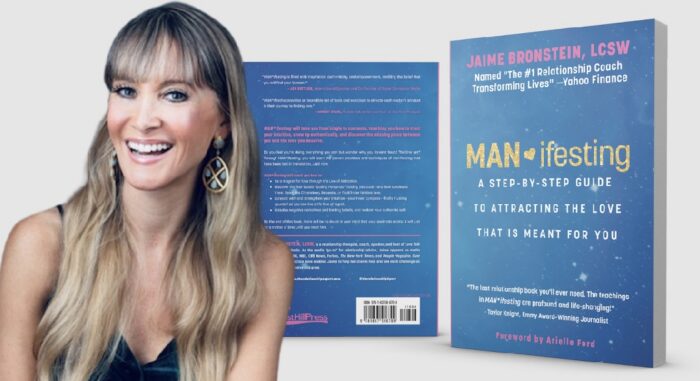
“Sometimes people rationalize bad behavior, but you shouldn’t give a relationship 9 million chances just because the stars are supposedly aligned.”
Both common sense and the science of relationship success appear to point toward it being based on the way two people treat each other, their common goals, shared values and more—not whether they’re both air signs. But sound reasoning often goes out the window when we’re falling in love.
The consensus astrologers, scientists and therapists agree on: Those who use their horoscope as a guide to choosing a partner in love should not forget to consult their heart, head and gut. They may tell you everything you need to know.