
It wasn’t too long ago when going to therapy was something people kept to themselves. Work burnout was framed as dedication, and anxiety was something you just learned to live with. The idea that your emotional state deserved the same attention as your physical health was a foreign concept.
End of an Era
Today mental health is a regular topic in daily conversations, unlike in past generations. People mention their therapists as casually as they talk about personal trainers or Botox. Saying, “I’ve been working through some stuff” has become now normal. For many young people, getting help is no longer seen as strange; it is just a part of life.
This change is happening because more people are willing to talk about it. When Simone Biles, the most decorated gymnast ever, left the Tokyo Olympics to protect her mental health, it was more than a personal choice—it was a cultural moment. She later said therapy was key to her comeback, telling reporters after her gold medal in Paris that she had a therapy session the morning of her competition.
“I feel a lot more free,” she said. “It lightens the load a lot.” This is not a product endorsement. It is the top athlete in her sport showing that mental health care is part of her training.
Biles is not the only one. Carson Daly has spent years talking openly about living with generalized anxiety disorder. He described panic attacks so severe that he didn’t know what was happening to him, and how cognitive behavioral therapy changed his life.
“I’ve suffered for over 20 years with, at times, debilitating anxiety and panic and never knew it,” he told People magazine. Now he actively advocates for mental health awareness and has built programming around it. Michael Phelps established a foundation specifically to reduce stigma around mental health challenges. Naomi Osaka walked away from the 2021 French Open to protect hers. LeBron James has talked about it. The list keeps growing.

These people have more than just fame; they have visibility. When someone who seems to have a perfect life says, “I go to therapy, and it helps,” it encourages others to consider therapy too.
The Shift
More than half of Gen Z has tried professional mental health services, and almost 40% go to therapy regularly. In contrast, most Boomers grew up in a time when people kept personal struggles to themselves.
“It’s encouraging that conversations around mental health have become more open and normalized, but stigma still exists — especially when it comes to understanding the difference between therapy and psychiatry. Therapy can help people process emotions, behaviors, relationships, and trauma, while psychiatry also addresses the biological and medical side of mental health,” noted Dr. William Fuller, Professor and Executive Vice Chair at the University of South Dakota’s Sanford School of Medicine Department of Psychiatry.
However, being open and being accepting are not the same. A 2025 global survey from BetterHelp, the world’s largest therapy platform, found that almost three out of four people think seeking mental health support is wise. However, nearly six out of 10 still feel society discourages it. We talk about mental health more, but we have not fully accepted the need for support. People discuss anxiety in general but hesitate when it comes to their own experiences.

The Phone as a Wellness Tool
As mental health conversations become more common, new tools have appeared. Apps like Headspace, Calm and BetterHelp make it easier to get support, either between therapy sessions or as an alternative. The market for these apps is now worth over $10 billion and keeps growing.
Research shows that mental health apps can lead to real, measurable improvements in depression and anxiety symptoms. These apps do not replace therapy. But for people who cannot get an appointment for months or need help late at night, they fill a gap that used to exist.
Even so, only about one in seven Americans saw a mental health professional last year. The need is huge: over 23% of U.S. adults had a mental health condition in 2024, but the system has not kept up. Although apps are helpful, they are just a bridge and not a final answer.
“Digital mental health tools can be incredibly helpful for accessibility and ongoing support, but they also have limitations,” said Fuller. “Psychiatry relies heavily on nuance — body language, affect, eye contact, speech patterns, physical presentation, even subtle changes in behavior that can be difficult to fully assess through an app or screen.”
The Cost Factor
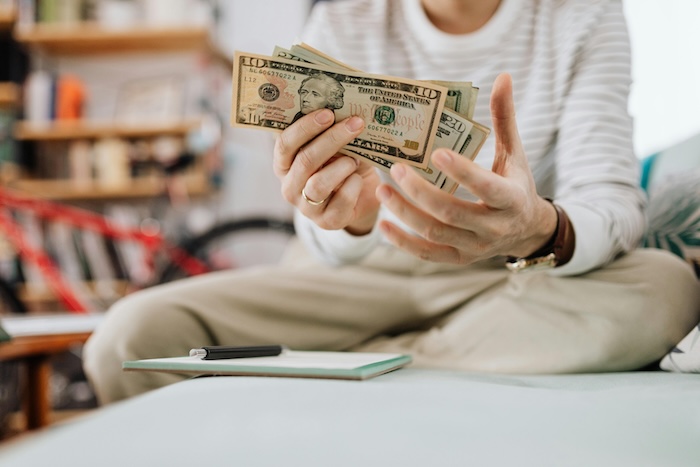
Cost remains the main reason people avoid therapy. Insurance coverage is unreliable, and waitlists are long. The wellness industry now offers many products that promise better sleep, less stress and a calmer mind; but many are expensive, and some may even make things worse.
When taking care of your mental health becomes just another task on your to-do list, or another area in which you might fall behind, the pressure to be well can start to feel like the same pressure that made you feel unwell in the first place.
Social media also has a big impact on our mental health—both good and bad. The same apps where people find support, talk about therapy or seek reassurance can also make users feel more anxious, overwhelmed or unsure. Some research shows that heavy social media use can even make people doubt whether mental health treatment works. The places people turn to for comfort can sometimes add to the stress they are trying to manage.
“We are seeing a real rise in anxiety, particularly among younger patients, that appears closely tied to constant social media exposure,” added Fuller. “The challenge is that the same devices people turn to for comfort and connection are often contributing to the stress, anxiety, and feelings of inadequacy they are trying to escape.”
What’s Next
The National Alliance on Mental Health states that half of all mental health conditions start showing symptoms by age 14, and three-quarters by age 24. Today’s young generation is the most aware and possibly the most burdened. They are doing what many of their parents and grandparents did not: talking about mental health, seeking help and refusing to see emotional struggles as a personal weakness.
Cultural change is slow, and this one matters.
Awareness by itself, though, does not create more therapists; lower session costs; or close the gap between those who need help, and those who get it. Mental Health Awareness Month is worth celebrating, and it is also a good time to ask what should happen next.
If you or someone you know is struggling, the 988 Suicide & Crisis Lifeline is available 24/7 by call or text.