We all want to put our best face forward in life, no matter what our current romantic status is. But for people who are on a quest for a romantic partner or in the early stages of a promising relationship, looking our best feels especially important. At the same time, showing our authentic self is of equal importance.
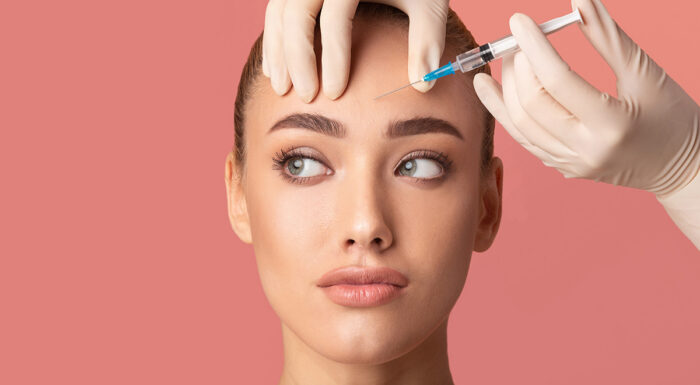
While Botox is often used to improve our appearance—those lines don’t always feel so fine—is it sabotaging our ability to engage with and show our emotions? And even if we are laughing or crying on the inside, if it doesn’t show on the outside, could that potentially impede the connection we are so desperately trying to make?
Multiple studies, including this recent one showing how Botox can subtly hamper emotions, and others demonstrating how Botox actually changes the way the brain interprets and processes another person’s emotions. The injections disrupt neuromuscular feedback, which impairs comprehension of others’ feelings.
Is the often memed-about Botox buzzkill real or a hyped-up, oversimplification of studies without merit?
Why Some Believe Botox Can Suppress Feelings
We communicate with each other through words, touch, body language—andour facial expressions.

Communication, body language and human behavior expert Dr. Lillian Glass, an author of more than a dozen books, says she has spent more than 40 years studying body language and facial expressions. In her private practice in Hollywood, where she works primarily with actors, she says she saw firsthand how excess Botox was ruining the relationships of her clients.
“The face is one of our most powerful communication tools,” Glass says. “Research has suggested that facial expressions don’t simply communicate our emotions to others‚ they may also reinforce what we ourselves feel. When facial movement is limited, our emotional expressiveness may also become more limited.”
Communication becomes noticeably flatter, which is where misunderstandings happen.
“One partner may mistakenly believe the other is emotionally distant, uninterested or less engaged when in reality, it may simply be the result of reduced facial movement,” she points out.

Dr. Carol Eisenstat, a board-certified anesthesiologist and physician, is the founder of Line Eraser MD in New Jersey. She works with Botox on the daily. But she knows that the facial feedback hypothesis, which suggests that expressions can influence and shape our emotional experience, does seem to indicate that Botox can blunt emotional processing.
“The relationship risk I actually see in practice isn’t suppressed feelings; it’s suppressed signaling,” Eisenstat says. “If your partner can’t see concern flicker across your face, they may read you as cold or checked out. That’s a communication problem, not a chemistry problem, and it’s dependent on and can be modified with technique. I intentionally underdose patients who are expressive communicators so the face still moves.”
Frozen faces—and emotions—both Glass and Eisenstat agree—can happen when an overzealous injector gets ahold of a face.
Others Don’t Believe Botox Suppresses Feelings
But others say they see Botox actually helping relationships around them.
Stephenie DeMasseo, a licensed medical esthetician and founder of Skin Results in Scottsdale, Arizona, says that clients raise concerns with her frequently about the impact Botox might have on their personal lives.
But she thinks it’s missing the point.
DeMasseo says that even clients who expressed concern say that Botox has allowed them “to be fully present in their relationships because for the first time in their lives, they are not preoccupied with how they look.”
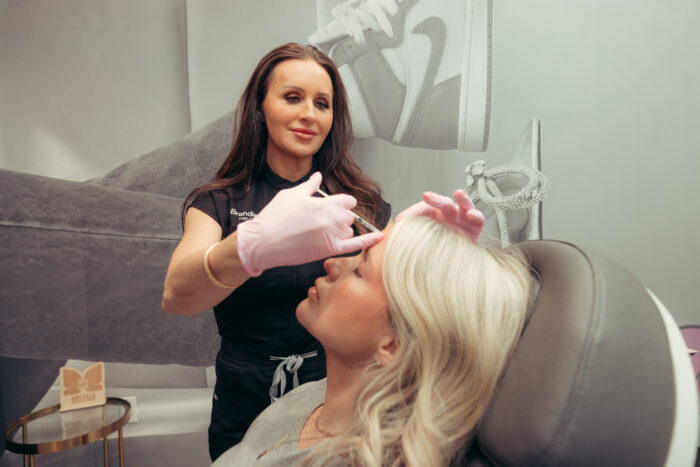
Brandie Heredia, a nurse practitioner, certified aesthetic injector and the owner of Unmarked Beauty & Wellness in Chandler, Arizona. She says the real-life examples she has seen of Botox’s effect on relationships has been positive.
“In clinical practice, I don’t see healthy relationships falling apart because someone received cosmetic Botox,” Heredia says. “In fact, many patients report the opposite experience. When they feel more confident and refreshed, they often become more socially engaged, smile more, and feel more comfortable in both personal and professional interactions.”
How you feel about your appearance, in other words, can change the way you feel about yourself. A boost in confidence can do wonders in the boardroom and the bedroom.
The Ball Is in Your (And Your Injector’s) Court
It’s undeniable that a relationship between one or more people with frozen facial features could present real communication issues.
At the same time, secretly obsessing over frown and laugh lines while on a date is also problematic.
In lieu of a society where looks and first impressions don’t matter, perhaps a more middle-of-the-road, restrained approach to injections is the best prescription for Botox-prompted emotional upheaval.
Making yourself more beautiful at the expense of authentic connection and understanding is hideous.
“A skilled injector understands that communication happens through the entire face, voice, body language and human connection—not just forehead movement,” Heredia says. “Botox can soften wrinkles without erasing personality, warmth or the ability to connect with others.”
Just talk to your practitioner about what you want—and don’t want.