Ever since the term “ghosting” emerged in the mid-2010s, a whole dictionary’s worth of terms has been invented to describe modern dating behavior—usually bad dating behavior. Take terms like “benching,“ meaning keeping someone around as a backup option. Or “breadcrumbing,” which is giving someone just enough attention to keep them hoping for more. And that’s just the B’s.
There’s also “orbiting,” when someone engages with you on social media but doesn’t actually try to date you, and “pocketing” or intentionally hiding a partner from friends and family. When I was Refinery29’s sex and relationships writer back in 2019-2020, I compiled a whole glossary of such terms. And post-pandemic, that list has only gotten longer.
Terms describing bad dating behavior could fill a book—even though you might argue that the majority of those terms can be replaced by the simple phrase “being an asshole.” But there are considerably fewer buzzwords describing positive, or at least neutral, approaches to dating. But this summer’s trending term does exactly that. Meet wildflowering.
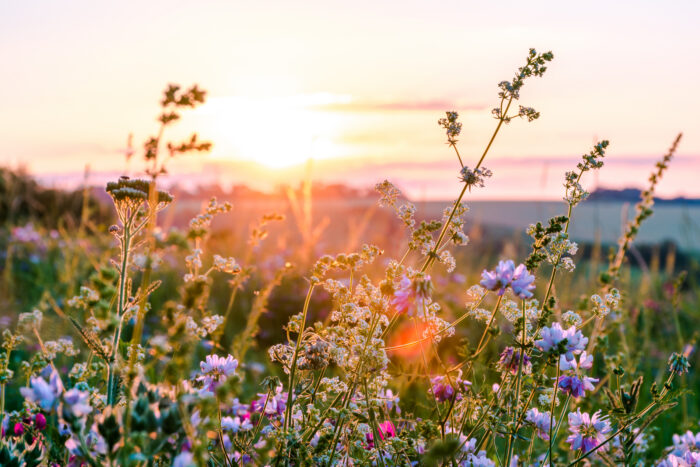
“Wildflowering” sounds a lot prettier than “breadcrumbing” or “orbiting.” You might imagine running through a field of flowers into the arms of your lover—like something out of Taylor Swift’s “But Daddy I Love Him” or a controversial tradwife influencer’s social media feed.
Or maybe it has you picturing a hike through hilly fields, enjoying views of wild trilliums or bluebonnets. The term, however, has a rather different connotation. In essence, it describes choosing a slower path when dating rather than rushing into a relationship.
Take it from the pros: Cosmopolitan defines the trend as “essentially just a relaxed approach to dating that involves being open to seeing where things go with a potential new love interest and letting romantic connections develop organically over time—as opposed to more goal-oriented dating.”
Vogue goes a bit more high-brow with a definition of “eschewing the pressure to label things immediately and instead just taking it slow and seeing what unfolds. In other words, instead of rushing to plant a relationship garden, you simply see what blooms and do your best to appreciate it on its own terms.”
The earliest mention found of the term is part of a 2025 survey of U.K. daters featured in a Stylist magazine article. However, a slew of relationship publications have picked it up since then and Google Trends shows a sharp increase of 500% in searches for the term beginning this past spring compared to last year.
Is wildflowering good, bad or a little more nuanced than that? Various experts have different opinions: Some assert that wildflowering is a positive trend allowing people to get to know their prospective partners and enjoy the early stages of dating rather than rushing into a relationship. It’s a healthy alternative to treating dating like a “second job,” according to Instagram’s the Everygirl: “We’re so tired of dating that the new goal is just to have a good time.”

But others say that wildflowering only leads to an increase in situationships with people who are unwilling to commit. One dating coach, Damona Hoffman, told USA Today that wildflowering “potentially sets you up for disappointment down the road, if you have no framework, no guidelines, no standards for how you want something to unfold romantically.”
As with pretty much all dating trends, whether wildflowering is good or bad for you will come down to your own personality, dating goals and history—as well as the way you communicate with the people you date. Sometimes, “let’s take it slow” means exactly that: intentionally taking the time to get to know each other before deciding whether to get more serious and try out an official relationship.
But sometimes, someone who says let’s take it slow has no intention of ever accelerating the relationship. Instead, it becomes a way to keep someone waiting and hoping for more. When clear communication, such as saying, “I’m looking for a friends with benefits situation” or “I’d like to see each other a couple times a month, and never more than that,” would have allowed the other person to say no thanks to those situations.
The tricky part is that it’s often hard to tell the difference at first. It can take time to discover if your intentions are truly aligned or if your date is just trying to appease you so they don’t lose you. Sometimes a stroll through the wildflowers ends at a lovely little town; and sometimes you get lost and die of thirst.
How about we make “search and rescue operations” the next dating trending term?